If you're a vendor in Sub-Saharan Africa, you already know the pain. A customer initiates a payment transaction, meets a failed API, or a compliance delay, and somehow the transaction gets aborted halfway.
And while most articles will call it a common occurrence, not choosing the best payout gateway can become a slow leak that sinks your entire business.
According to a McKinsey report, Africa’s digital payments market exceeded $40 billion in 2025. Yet the same report notes that up to 60% of digital payment failures are infrastructure-related. This means they could have been prevented with smarter gateway selection.
The article you're about to read is the deep, battle-tested knowledge that nobody gives away for free. Until now.
So whether you’re just starting out or exploring better options, these five expert tips will help protect your revenue, scale your growth, and keep your customers coming back.
What is a Payout Gateway?
A payment gateway is a system that processes inbound transactions; money coming into your business from customers.
It handles authorizations, captures funds, and facilitates settlement from your customers' accounts to yours. Think of it as the front door for revenue.
And a payout gateway handles outbound disbursements; money going out of your business to suppliers, freelancers, affiliates, drivers, agents, or customers receiving refunds.
Some fintech platforms do both. Many don't. If you run a gig platform, logistics company, or any business that pays multiple people at scale, your payout infrastructure matters as much as your payment collection, maybe even more.
5 Expert Tips On Choosing The Right Payouts Platform For Your Business
In Sub-Saharan Africa, where over 70% of digital transactions are mobile, and bank account penetration varies wildly from country to country, your payout gateway must’ve mastered the fragmented payment system.
Tip #1: Match Your Gateway to Your Country's Payment Rail Reality, Not the Other Way Around
This is the #1 mistake merchants make. They choose a globally recognized gateway that technically supports their country, then spend months discovering all the ways it doesn't really work.
Every Sub-Saharan African market has dominant payment rails, and your gateway must be native to those rails, not just compatible with them.
Top Payment Rails in Africa (2026)
|
Country |
Dominant Payment Rail |
Market Penetration |
|
Nigeria |
Bank transfers, USSD, Verve Cards, Mobile Money (via OPay, PalmPay) |
Bank transfer accounts for ~55% of digital payments |
|
Kenya |
M-Pesa (Safaricom) |
Over 96% of Kenyans use M-Pesa; processes ~50% of Kenya's GDP |
|
Ghana |
Mobile Money (MTN MoMo, Vodafone Cash, AirtelTigo) |
67% of adults use mobile money |
|
Tanzania |
M-Pesa, Tigo Pesa, Airtel Money |
Mobile money penetration exceeds 55% |
|
South Africa |
Card payments, EFT (Instant EFT), SnapScan |
Card still dominant; 80%+ banked population |
|
Senegal/Francophone West Africa |
Orange Money, Wave, Free Money |
Wave processes $7B+ annually in Senegal alone |
|
Uganda |
MTN MoMo, Airtel Money |
76% of adults are mobile money users |
|
Ethiopia |
Telebirr (dominant), CBEBirr |
Telebirr crossed 30 million users in 2 years |
Before you even evaluate pricing or features, ask any gateway sales rep this question: "Show me your direct API integration with [the specific mobile money operator in my market]." e.g "Show me your direct API integration with Bank transfers or card payments”
If they say "we support it through an aggregator," or not at all that's a red flag. Direct integrations with local payment rails mean fewer failure points, faster settlement, and lower fees because you're cutting out middleware layers.
Here’s what you should do: Map your customer geography before selecting a gateway. It should inform you on what payment rail to integrate.
Tip #2: Understand the True Cost of a Gateway
Every gateway will quote you a percentage. "1.5%." "2%." "Flat $0.25 per transaction." And every merchant —especially beginners— takes that number, multiplies it by their expected transaction volume, and calls it a day.
That calculation is incomplete. And for high-volume merchants, that could translate into future financial problems.
Payment Fees That all Vendors should know
- Settlement Float Costs:
Many gateways in Sub-Saharan Africa hold your settlement for 24-72 hours — sometimes 5-7 business days for international payouts. If you're processing NGN 50 million monthly, a 3-day float at a conservative opportunity cost of 10% annual yield = NGN 41,000+ in opportunity cost monthly. Scale that over a year and you're looking at nearly NGN 500,000 in silent losses.
- Currency Conversion Spreads
When a gateway advertises "free currency conversion," read the fine print. The real cost is buried in the difference between the interbank exchange rate and what the gateway actually gives you.
In 2023, the NGN/USD spread on some Nigerian payment processors ranged from 3-8% above interbank rates. Ask the gateway for their FX rate, then compare it to the live interbank rate on Bloomberg or XE.com. The spread is your true FX cost.
- Chargeback Fees
In markets where card payments exist (South Africa, Kenya, Nigeria), chargebacks are a growing problem. Gateway chargeback fees typically range from $15-$50 per dispute regardless of outcome. If your dispute ratio hits 1%, on 1,000 monthly transactions that's 10 chargebacks = up to $500 in fees you weren't budgeting for.
- Minimum Monthly Fees
Some enterprise gateways charge minimum monthly commitments. If your business is seasonal (agritech, tourism, event-based commerce), you could be paying for capacity you're not using for 4-6 months of the year.
- API Call Costs
Advanced merchants who build automated payout systems (payroll disbursements, mass transfers, affiliate payouts) should audit API call limits. Some gateways charge beyond a threshold — a silent cost that only reveals itself when your engineering team starts sending 50,000 payout requests monthly.
How to Calculate Your Total Cost of Ownership (TCO)
The TCO formula for gateway selection:
TCO = Transaction Fees + Settlement Float Opportunity Cost + FX Spread Costs + Chargeback Fees + Minimum Fees + Integration/Development Costs + Downtime Cost (uptime % × average transaction value)
Tip #3: Compliance Is Your License to Operate, and It Can End Your Business Overnight.
From South Africa to Nigeria, regulators are tightening the screws. The FSCA hit Banxso with a ZAR 2 billion penalty for deepfake fraud (leading to its liquidation), while the CBN ordered 5 major fintech institutions to pause new customer onboarding over illegal FX transaction allegations.
These cases are not disconnected. They are the new normal as regulators across Africa mature and assert authority.
Compliance Checklist for Merchants in 2026
The Central Bank of Nigeria published its first comprehensive Fintech Report in 2026. Here are some new regulatory policies could that affect merchants and enterprises:
- Mandatory Geo-Tagging of All PoS Terminals: Your terminal must be registered to a fixed location. Roaming or moving terminals are no longer permitted.
- Dual Connectivity for Transaction Routing: All PoS terminals must maintain active connections to both licensed Payment Terminal Service Aggregators—NIBSS and Unified Payment Services Limited (UPSL)
- ISO 20022 Payment Messaging Standard: All payment transaction messages must be formatted in the ISO 20022 global messaging standard.
- KYC, KYB & AML Baseline Standards: By June 2026, your payment provider should have an automated AML system in place. Ensure they are compliant.
- New Cash Management Policies: Business withdrawals are now capped at ₦5 million weekly. Plan large cash needs accordingly.
If your business involves cross-border payouts, ensure you engage a fintech compliance consultant in each major market you operate in.
Tip #4: Uptime Protects your Revenue
The industry standard for payment gateway uptime is 99.9%. However, this benchmark often fails to account for the unique operational hurdles present in the African fintech landscape.
If you operate in Sub-Saharan Africa then, you'll be battling power outages, unreliable internet infrastructure, and telco instability. These localized disruptions can cause significant revenue leaks if your gateway does not have specific regional redundancies in place.
Every good payment provider must have these attributes:
- ≲24 hrs incident reponse time
- An adequate disaster recovery protocol
- Real time monitoring.
Tip #5: Integration Quality Predicts Your Long-Term Success More Than Any Other Factor
You don't need to be a developer to understand that the quality of a gateway's technical infrastructure determines your payment speed, operation costs, and user experience. Here are the basic Developer metrics to look out for when choosing the best payouts infrastructure.
Basic Developer Metrics for Payment Providers
- SDK Quality and Mobile-First Architecture
In a region where smartphone internet penetration is growing at 12% annually (GSMA 2023) and most commerce happens on Android devices, your gateway's mobile SDK must be lightweight, fast, and optimized for low-bandwidth environments.
Ask the dev team about the size of their mobile SDK, and the average checkout completion time on 3G networks.
2. Webhook Reliability
Webhooks are the mechanism by which your gateway tells your system "this payment succeeded" or "this payout was delivered." If webhooks fail or arrive late, your system might show a customer a failed transaction when it actually succeeded leading to double-payments, manual reconciliation nightmares, and destroyed customer trust.
Webhooks must have retry logic (minimum 3 retry attempts), be delivered within 30 seconds of transaction status change, and come with a dashboard where you can view and manually replay failed webhooks.
3. Sandbox Environment Quality
Before you build anything real, you should test in a sandbox. But here's what most merchants don't know: many African payment gateways have terrible sandbox environments that don't accurately simulate real transaction conditions — especially failure scenarios.
A sandbox that only lets you test successful payments is useless. You need to test for insufficient funds scenarios, network timeout simulations, partial payment handling, and refund and reversal flows.
If a gateway's sandbox doesn't support comprehensive failure testing, their production environment will surprise you at the worst possible moment.
4. Documentation Quality
This is a leading indicator of a gateway's overall operational excellence. Poor documentation = poor engineering culture = unreliable platform.
The best gateway documentation should include:
- Quickstart guides that work the first time
- Comprehensive API reference with real code examples in multiple languages
- Clear error code explanations with recommended resolution steps
- Changelog that shows active development and maintenance
- Active developer community or forum
Spend 30 minutes reading a gateway's documentation before you sign anything. You'll learn more about who they really are than any sales call will tell you.
5. Reconciliation and Reporting Tools
At scale, manual reconciliation is a full-time job that shouldn't exist. Your gateway should provide:
- Automated reconciliation reports in CSV/Excel/API format
- Real-time transaction dashboards
- Payout confirmation with full audit trail
- Tax-ready reporting (increasingly important as African tax authorities modernize)
The Sub-Saharan Africa Gateway Evaluation Scorecard
Use this framework to objectively compare any two gateways before making a decision:
|
Evaluation Criterion |
Weight |
Gateway A Score (1-10) |
Gateway B Score (1-10) |
|---|---|---|---|
|
Local payment rail coverage |
25% |
|
|
|
True TCO (total cost) |
20% |
|
|
|
Regulatory compliance status |
20% |
|
|
|
Uptime SLA + redundancy |
15% |
|
|
|
Developer experience + API quality |
15% |
|
|
|
Customer support quality |
5% |
|
|
|
TOTAL WEIGHTED SCORE |
100% |
|
|
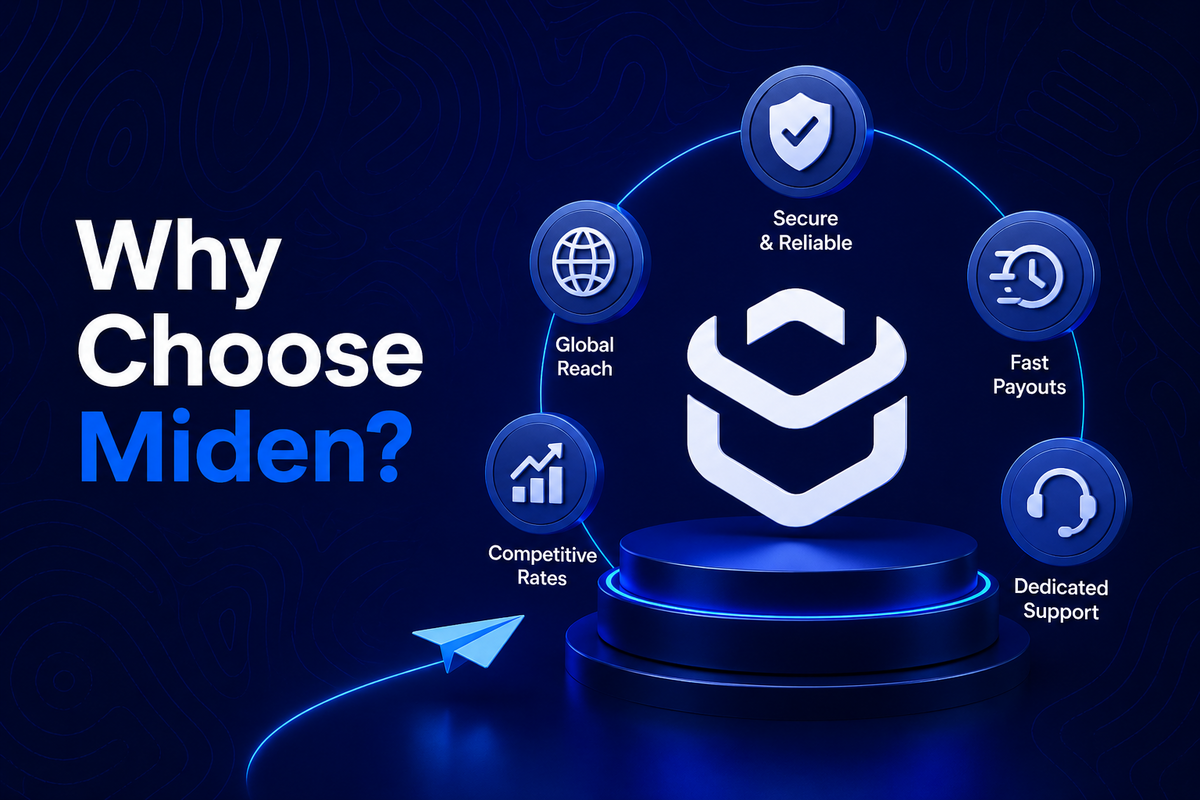
Why Vendors Choose Miden
The merchants who consistently succeed in this market know that strong payment infrastructure is a real competitive advantage. Miden helps you turn it into leverage.
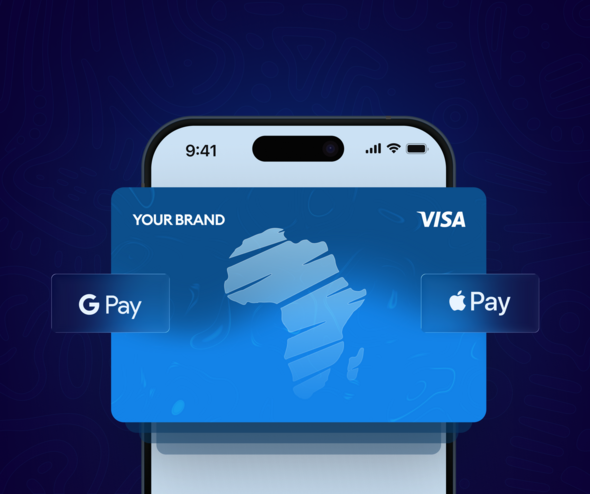
Miden is more than a gateway, it’s a complete payment engine. We power card issuing, payouts, and global payments through one simple API, and with our new Tap-to-pay, you can start collecting contactless payments, immediately without the hassle of managing multiple providers .
When your checkout is faster and more flexible than the competition, you convert more customers and build lasting loyalty.
Don't forget, the front seats in African digital payments belongs to the merchants who think in scale and build in simplicity. Now, you have the framework to be one of them. Don't waste it.
Frequently Asked Questions (By Real Vendors)
Q: What happens to my money if the gateway goes bankrupt or gets shut down by a regulator?
A: This is called "safeguarding" in regulatory language.
Ask your provider: "Where are merchant funds held? Are they held in a segregated escrow account separate from the company's operational funds?" Licensed gateways in well-regulated markets like Miden are required to safeguard merchant funds. Using unlicensed or poorly regulated ones means you're an unsecured creditor.
Q: Can I negotiate gateway fees?
A: Absolutely, sadly most merchants don't.
Transaction fee negotiation typically begins at NGN 1M+ monthly transaction volume in Nigeria, KES 1M+ in Kenya, or $10,000+ USD equivalent monthly anywhere. Even a 0.3% reduction on significant volume saves thousands annually. Always negotiate.
Q: What is a "reserve" and why might a gateway hold my money?
A: A reserve is a portion of your settlement that the gateway withholds as security against chargebacks, refunds, or regulatory issues. Reserves can be rolling, i.e (% of every settlement held for 90 days) or fixed (a lump sum held for the duration of your contract). Always read reserve terms. For new merchants, reserves of 5-10% are common. Negotiate the release schedule aggressively.
Q: Should I use one gateway or multiple?
A: The answer depends on your monthly volume. Below $5,000/month equivalent: one gateway is fine. Above $50,000/month: use Miden. Multiple gateways are exhausting in the long term. With Miden, you can confidently scale your business enjoying NFC physical and virtual cards with 99.9% uptime.
If you have questions about Miden suite of products or wish to talk to an expert, our sales team is more than ready to onboard you.